
Elevating Home Energy: The Essential Vastu Guide to Pooja Room Alignment
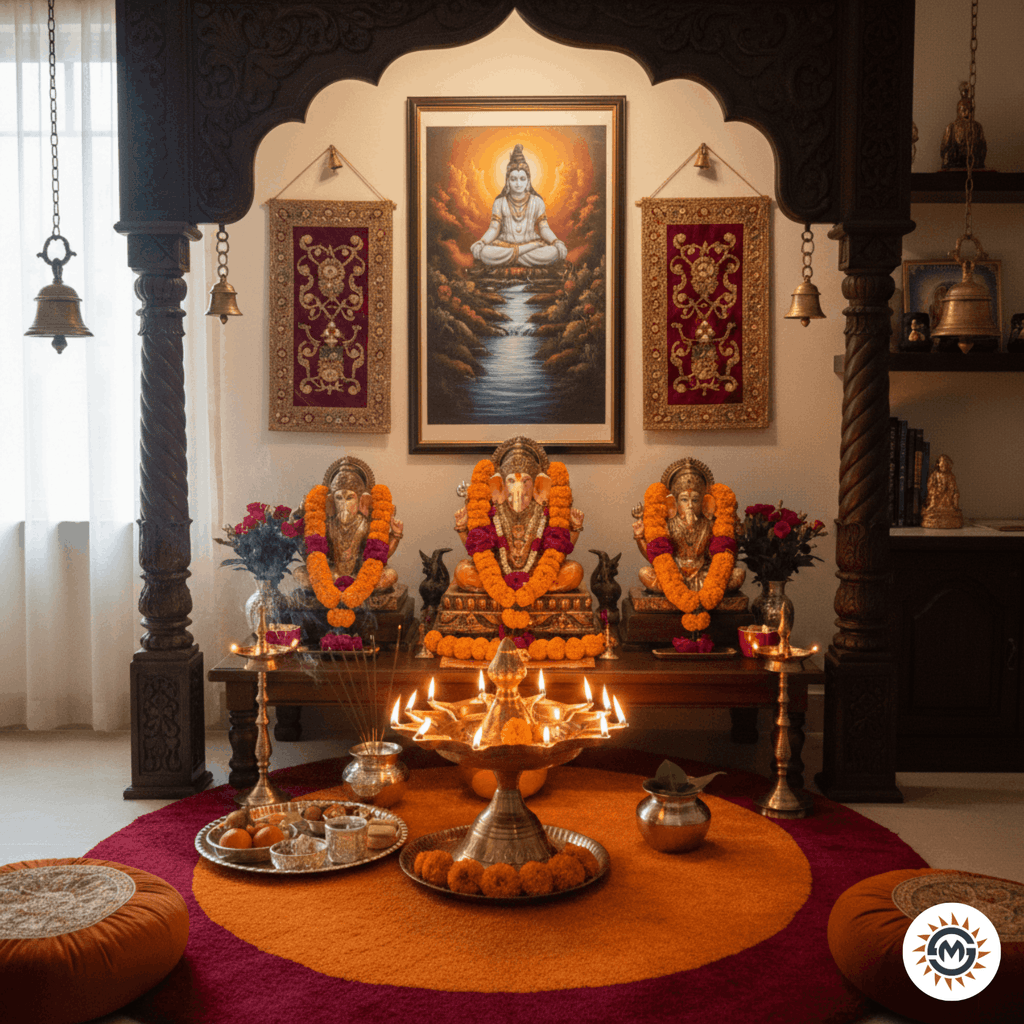
The Sacred Space: Vastu Principles for Your Home Pooja Area
In every home, a designated space for prayer and reflection serves as an anchor of peace and spiritual energy. According to Vastu Shastra, the ancient Indian science of architecture, the placement and arrangement of your pooja area (or prayer space) are not arbitrary. They are deeply connected to harnessing positive cosmic energies, fostering tranquility, and inviting divine blessings into your abode. It's about creating an environment where your devotion can flourish, and where the sacred truly feels sacred.
This sacred corner of your home, whether a small shelf or an entire room, influences the spiritual well-being of everyone living there. The flow of energy, the direction of your prayers, and even the materials used within this space contribute to its overall vibrance and effectiveness as a spiritual hub.
Here is an image to help you visualize a serene and well-placed pooja area:
Directional Significance
One of the most foundational aspects of Vastu for a pooja area lies in its cardinal direction. The Northeast corner is often considered the most auspicious direction for placing your idols or deities. This direction, known as Ishanya, is associated with the element of water and is believed to be the zone of divine energy and spiritual growth. Placing your pooja unit here allows the worshipper to face the East or North while praying, directions that are said to enhance concentration and the reception of positive energy.
Other significant directions include the East or North, which are also considered favorable for the worshipper to face. These directions are linked to cosmic energy flows that support meditation and spiritual practices. The sun rises in the East, symbolizing new beginnings and light, while the North is associated with wealth and stability.
Placement Considerations Beyond the cardinal directions, the specific placement within a room also holds significance. The pooja area is ideally located on the ground floor of the home. It should be a tranquil and clean space, free from clutter, as cleanliness is considered paramount for inviting positive vibrations.
It's also generally understood that a pooja area should not be placed directly adjacent to a toilet or bathroom wall, nor should it be under a staircase. These placements are thought to diminish the sacredness and positive energy of the space. Similarly, placing a pooja unit in a bedroom is often avoided, unless it's a very small, unobtrusive unit that can be covered at night, maintaining the sanctity separate from sleeping activities.
The Level of Deities
The height at which idols or images of deities are placed is another subtle but important Vastu principle. The idols should ideally be placed at a height where their feet are at chest level when you are seated for prayer. This ensures proper reverence and connection during worship. The deities should not be placed directly on the floor.
Illumination and Air Flow
Natural light and good ventilation are integral to a vibrant pooja area. Sunlight, especially the morning sun, is believed to purify the space and infuse it with positive energy. Good airflow ensures the space remains fresh and lively, allowing spiritual energy to circulate freely.
Creating a pooja area that aligns with Vastu principles is about respecting the subtle energies that govern our homes and our spiritual lives. It's about consciously designing a space that fosters devotion, brings peace, and uplifts the soul.