
Shubh Naamkaran Muhurat: Guide to Naming Ceremonies
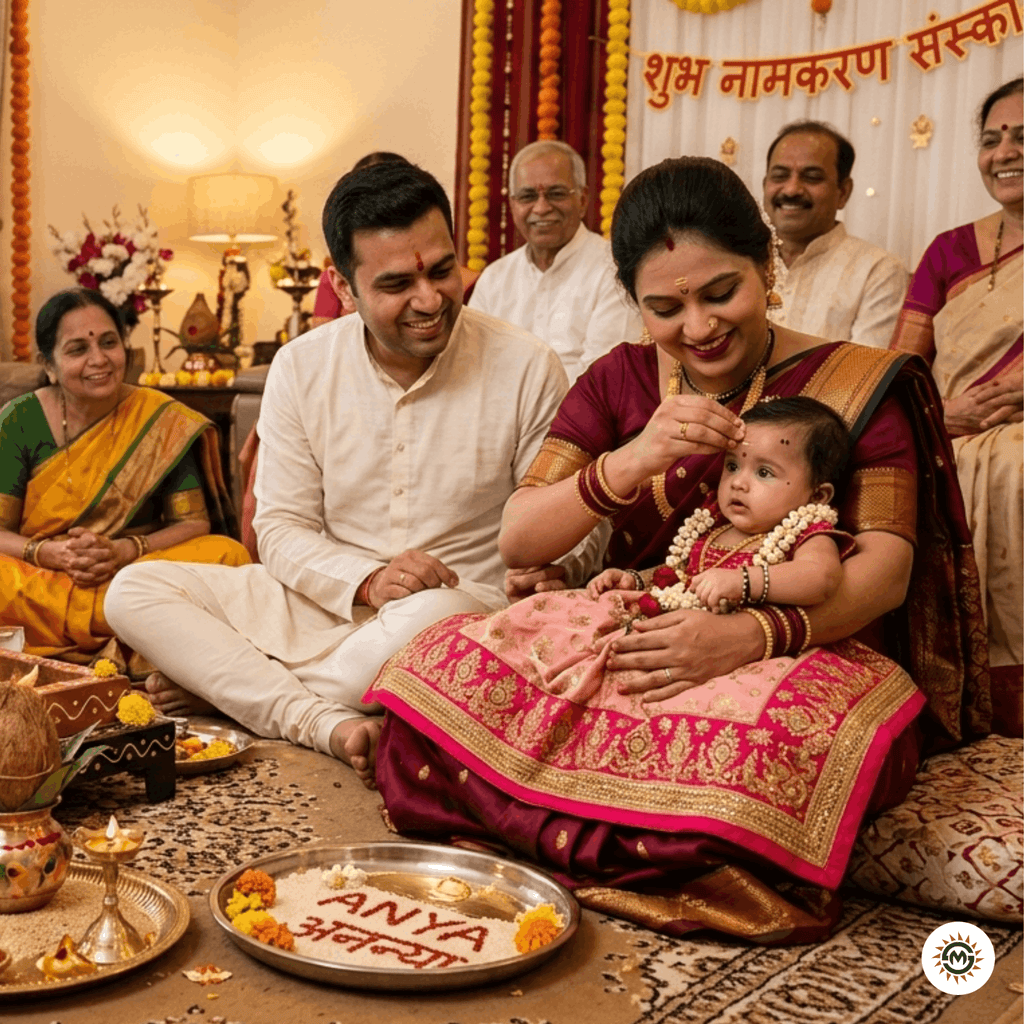
The First Gift: Choosing the Perfect Shubh Muhurat for Your Baby’s Naamkaran
Welcoming a new member into the family is a journey of pure joy, but in the Vedic tradition, it is also a journey of deep responsibility. Among the sixteen Sanskars (rites of passage), the Naamkaran Sanskar—the naming ceremony—holds a place of profound importance.
It is more than just picking a name; it is the moment a child is introduced to the world, and more importantly, to the cosmic energies that will guide their destiny.
Why Timing is Everything in Naamkaran
In Vedic astrology, a name is not just an identity; it is a vibration. When we perform the Naamkaran during a Shubh Muhurat, we ensure that the child's name resonates harmoniously with the position of the planets at that specific moment.
Astrologically, the naming ceremony seeks to balance the Panchang(five limbs of time):
-
Tithi (Lunar Day): Ensuring the moon's phase is waxing and full of growth.
-
Nakshatra (Constellation): Aligning the child’s character with a favorable star.
-
Vaar (Day of the week): Each day is ruled by a planet that influences temperament.
-
Yoga: The mathematical angle between the Sun and Moon.
-
Karana: The half-day duration that dictates the "action" of the day.
General Auspicious Windows for 2026
While every child has a unique birth chart, certain windows in the Hindu Calendar are traditionally favored for Naamkaran. Generally, the ceremony is performed on the 11th or 12th day after birth, but if that isn't possible, astrology points toward these favorable conditions:
Favorable Nakshatras
The "Star" under which the name is given is the most critical element. The following are considered highly auspicious for a naming ceremony:
-
Fixed Stars: Rohini, Uttara Phalguni, Uttara Ashadha, and Uttara Bhadrapada.
-
Moving Stars: Punarvasu, Swati, Shravana, and Shatabhisha.
-
Gentle Stars: Anuradha, Mrigashirsha, Chitra, and Revati.
Auspicious Tithis (Lunar Days)
Standard practice avoids the Amavasya (New Moon) and Rikta Tithis (4th, 9th, and 14th days of the lunar month). Instead, focus is placed on:
- Pratipada (1st)
- Dwitiya (2nd)
- Panchami (5th)
- Saptami (7th)
- Dashami (10th)
- Ekadashi (11th)
- Trayodashi (13th)
The Role of the Day (Vaar)
The day of the week sets the "tone" for the ceremony:
-
Monday, Wednesday, Thursday, and Friday are considered the most "Saumya" (gentle and auspicious) for children.
-
Sunday is often chosen for children expected to lead or hold positions of authority.
Important Astrological Considerations
When determining the Muhurat, several "Dosh" or planetary afflictions are analyzed to ensure the child’s path remains clear of obstacles:
-
Solar & Lunar Eclipses: Traditionally, the period around an eclipse is avoided for naming, as the energy is considered too volatile.
-
Sankranti: The day the Sun moves from one zodiac sign to another is generally bypassed.
-
Personal Chart Alignment: The Muhurat must ideally be "Shuddha" (pure) in relation to the child's Moon sign (Rashi).
Final Thoughts
A name is a seed planted in the garden of a child’s life. By selecting a Shubh Muhurat, parents are essentially choosing the most fertile soil and the best weather for that seed to grow. It is a beautiful way to honor the ancient wisdom of the stars while celebrating the future of your little one.